Interior and Exterior terrazzo floors
We are passionate about our work 💡
As a robust team, we provide expert epoxy and cement-based terrazzo applications globally.
We are a highly specialized team in terrazzo flooring applications. We possess the capability to scale our team size dynamically in proportion to the project area (metraj). Backed by an extensive inventory of machinery and equipment, alongside our dedicated project managers, site chiefs, and technical personnel, we are fully equipped to deliver our services anywhere in the world
Advantages of Terrazzo flooring application 🔎
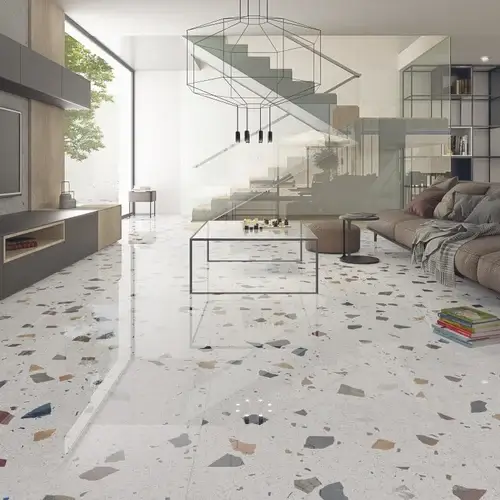
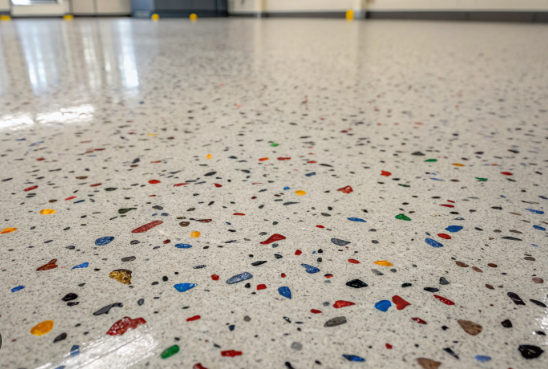
Cement or epoxy terrazzo is one of the oldest and most durable flooring systems, dating back to ancient times. Traditionally, it is produced by combining a cement-based binder with decorative aggregates such as marble, granite, dolomite, glass, and other natural materials. Once the mixture has cured, the surface is ground, honed, and polished to achieve the seamless, elegant finish that characterizes Terrazzo flooring application
Today, modern manufacturing techniques have enhanced traditional cement terrazzo systems, combining timeless aesthetics with improved performance, durability, and design flexibility.
press durability: 3-4 lbs. PSF.
Advantages of Terrazzo flooring application 💎
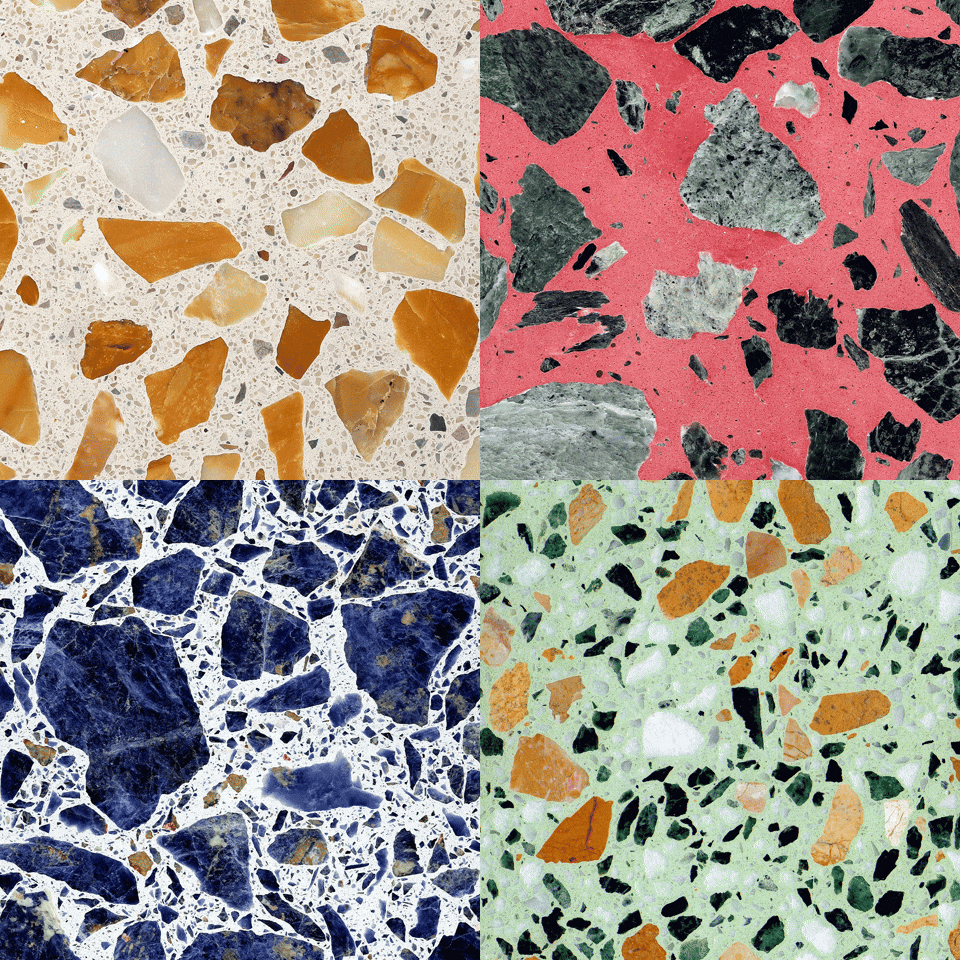
Unlimited color combinations and custom matrix designs
Excellent color consistency and design flexibility
High compressive strength and superior wear resistance
Ideal for multicolored patterns, logos, and artistic flooring designs
Long service life with minimal maintenance requirements
Suitable for large seamless floor areas
Can be installed over properly prepared concrete substrates
Compatible with properly installed plywood and wood subfloors when specified
Wide variety of decorative aggregates including marble, granite, glass, shell, metal, wood, and natural stone
The use of decorative glass chips and specialty aggregates may increase the overall installation cost.
Technical Specifications 📋
System Type: Cement Terrazzo flooring application
Divider Strip Sizes: Nominal 3 mm / 12 mm
Aggregate (Chip) Sizes: 0–1 mm, 3 mm, 6 mm, and optional 12 mm
System Thickness: Approximately 15–20 mm
Weight: Approximately 3–4 lbs/ft² (PSF)
Substrates: Concrete, properly prepared plywood, or wood subfloors
Installation System
Cement terrazzo is typically bonded directly to a concrete substrate. Proper substrate preparation is essential to ensure long-term performance and adhesion.
Each terrazzo mix is produced according to a carefully designed formula based on 🚜👷🚧🏗️
Binder color
Aggregate type
Aggregate size
Aggregate proportion
Desired surface appearance
Depending on the project requirements, the following terrazzo systems can be produced ✅️
Palladian Terrazzo
Venetian Terrazzo
Rustic Terrazzo
Traditional Cement Terrazzo
Decorative aggregates may include ✅️
Marble
Granite
Glass
Mother-of-pearl and shell
Metal chips
Wood particles
Various natural stones
Control Joints and Installation Details
Proper control joint planning is one of the most important aspects of Terrazzo flooring applicatio. Divider strips are generally aligned with the concrete control joints to accommodate substrate movement and reduce the risk of cracking.
Concrete joint layouts should comply with the recommendations of ACI 302.1R – Guide for Concrete Floor and Slab Construction. Our installation methods incorporate additional precautions to minimize crack formation and maximize floor durability.
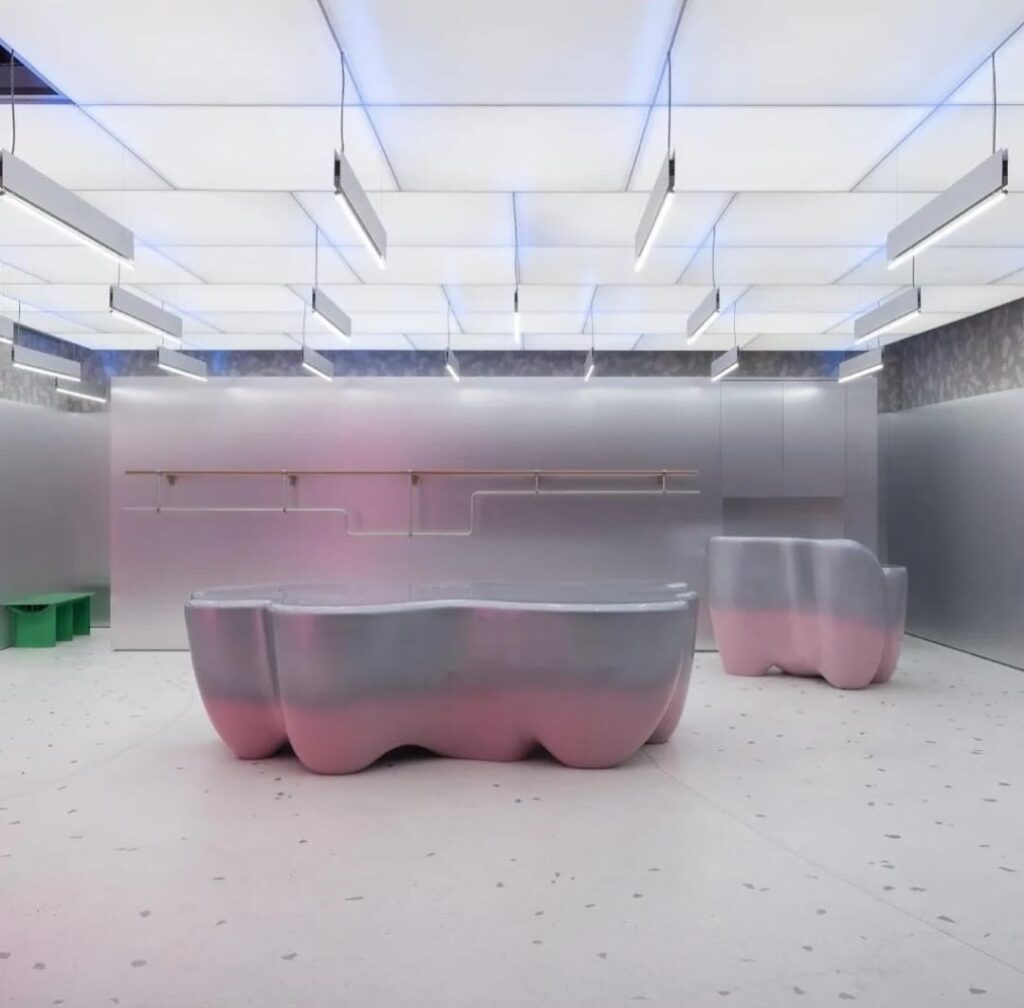
Terrazzo flooring application For large floor areas ✅️
Control joints should pass through corridor intersections and inside corners.
Structural expansion joints should be incorporated where significant building movement is anticipated.
Decorative divider strips are intended for design purposes only and should not be considered structural movement joints.
Design Flexibility
terrazzo offers architects and designers virtually unlimited creative possibilities. By combining different binder colors with a wide range of decorative aggregates, unique flooring designs can be created, including:
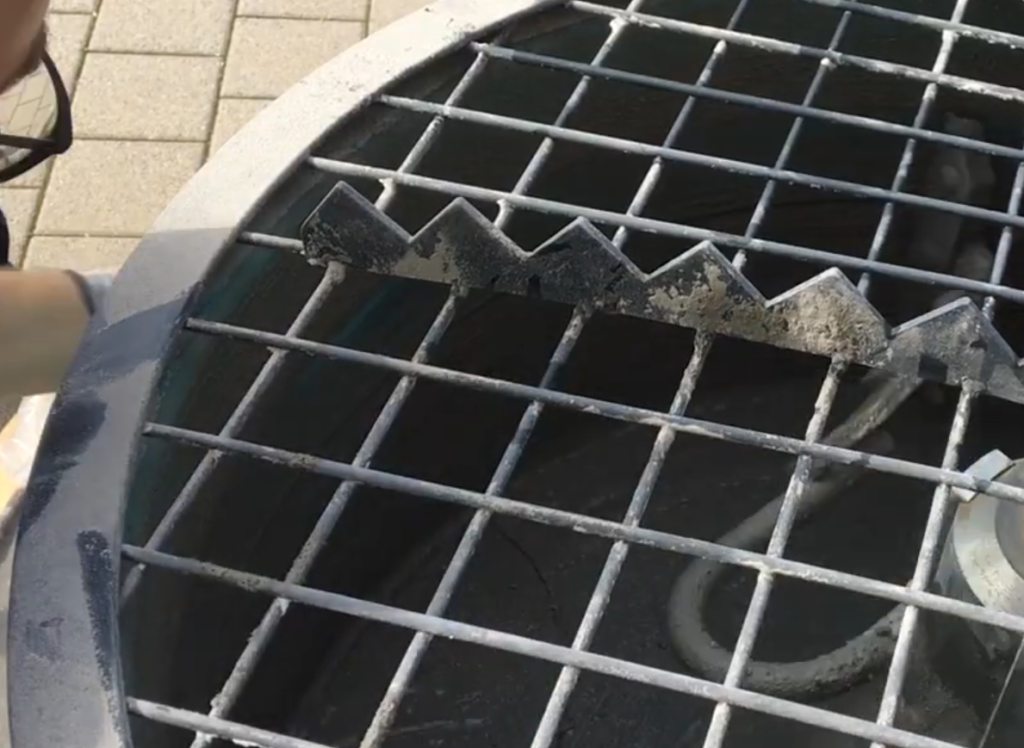
Corporate logos
Brand identity elements
Geometric patterns
Artistic flooring
Large-scale decorative installations
Applications
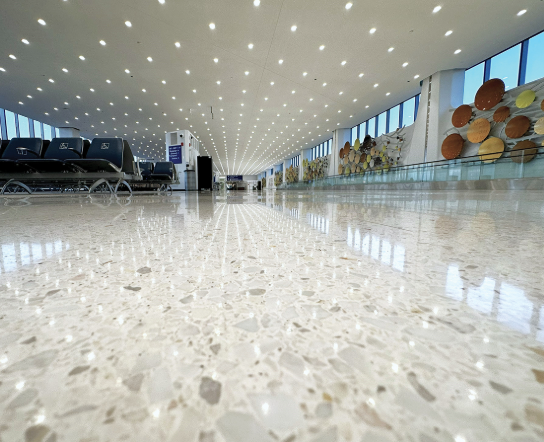
Terrazzo flooring application is widely used in high-traffic commercial and public buildings, including ✅️
Shopping malls
Hotels
Airports
Hospitals
Universities
Government buildings
Museums
Office buildings
Residential developments
Cultural centers
Its exceptional durability, timeless appearance, and low maintenance requirements make cement terrazzo one of the preferred flooring systems for prestigious architectural projects worldwide.
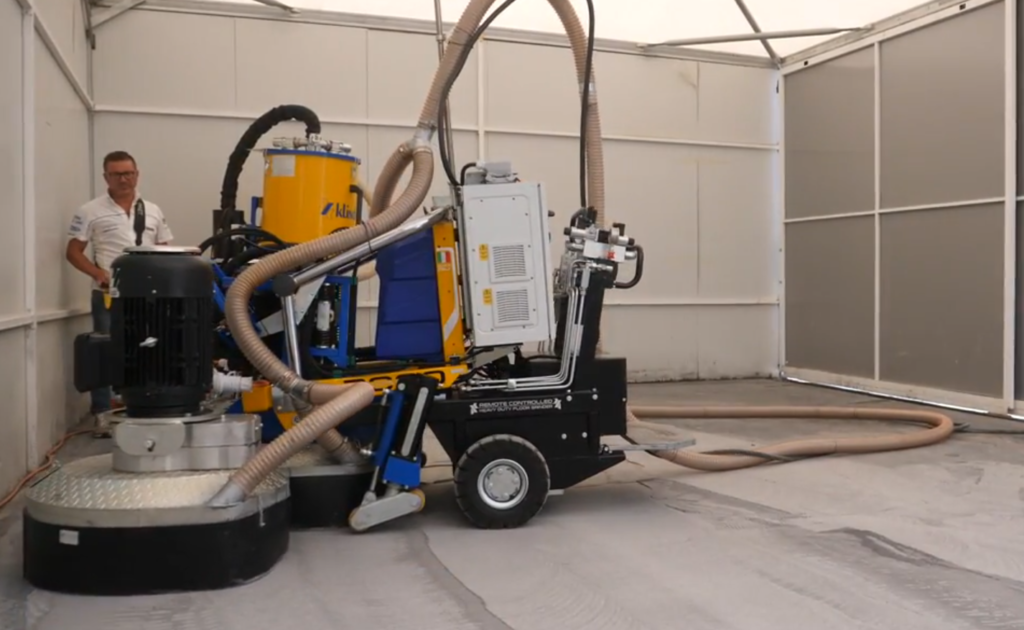
Terrazzo grinding Techniques ✅️
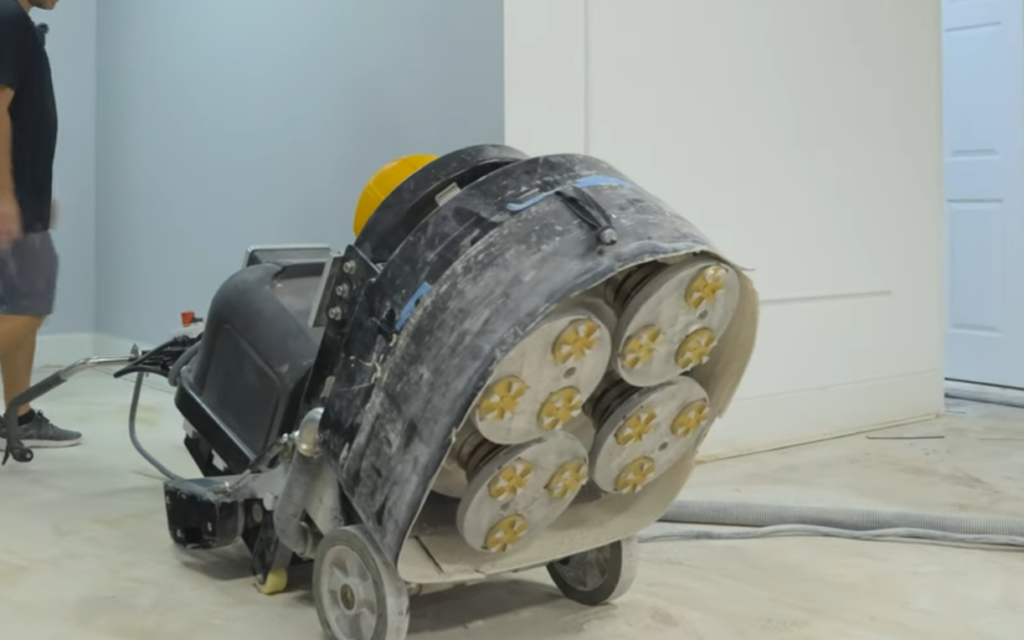
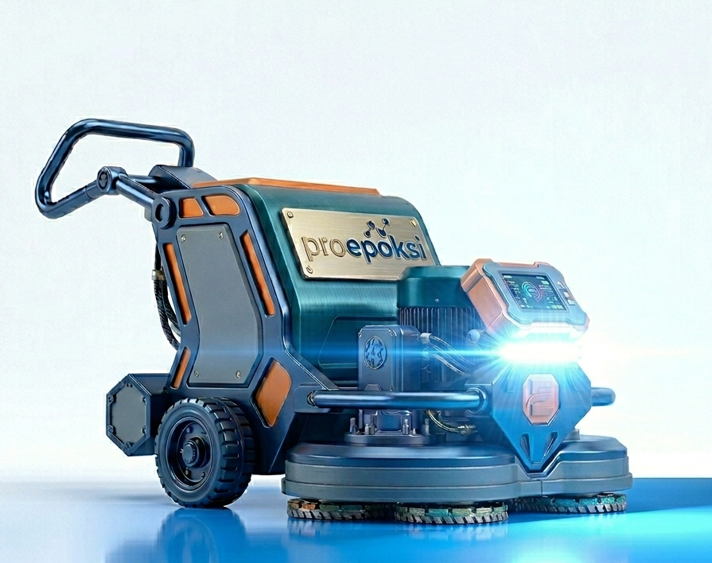
The grinding process is performed using specialized equipment that removes the top layer of the terrazzo. This process exposes the aggregates and creates a flat, level surface. Depending on the initial finish and the desired final appearance, different grinding techniques can be utilized.
Terrazzo flooring application achieving the Final Look ✅️
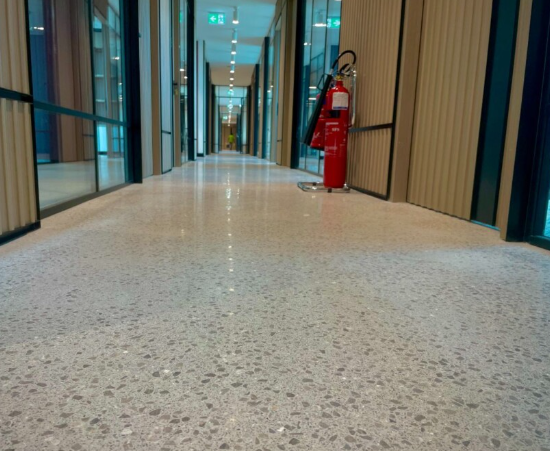
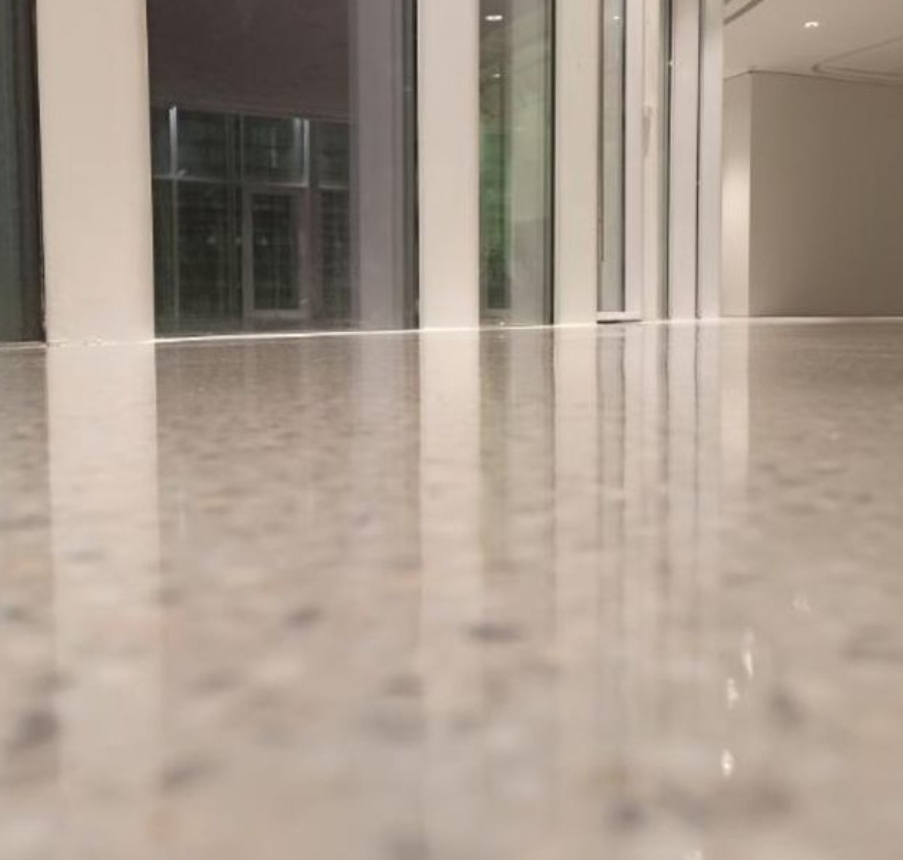
Following the grinding process, the floor is polished to achieve the desired shine. This process is carried out using finer-grit abrasives and polishing pads. Proper polishing enhances visual appeal and protects the surface from damage. The final gloss level can be tailored to the client’s specific preferences.
Terrazzo Selection – Proepoksi ✅️
Selecting terrazzo requires considering the specific needs and design goals of the space. Its durability and low maintenance make it ideal for high-traffic environments such as commercial areas, schools, museums, hotels, and hospitals.
- Design Flexibility: Terrazzo can complement various aesthetic styles, ranging from modern to traditional.
- Customization: A wide array of color and aggregate options allows it to blend seamlessly into different decorative settings. The final choice typically relies on finding the perfect balance between aesthetic preferences and functional requirements.
Ultimately, comparing terrazzo with other flooring options not only highlights its unique strengths but also underscores the value of investing in a long-lasting, visually stunning flooring solution.
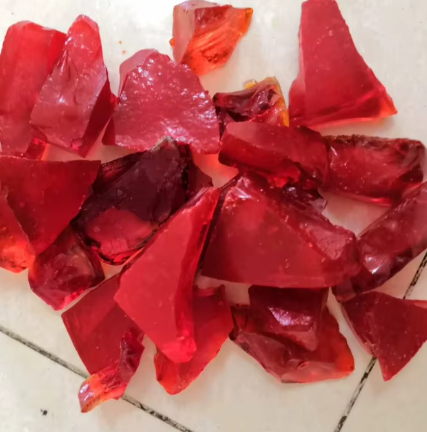
Terrazzo Design Flexibility and Aesthetics
One of the most distinctive features of Terrazzo flooring application is its incredible design flexibility. It allows for a vast array of color combinations, patterns, and textures. Many designers appreciate terrazzo for its ability to create both subtle and bold visual statements across various applications.
This flooring can be customized to fit any style, from classic to contemporary. Patterns can be intricate or minimalist, allowing homeowners and businesses to express their unique aesthetic vision. Furthermore, thanks to the sustainable integration of recycled materials, terrazzo stands out as an eco-friendly option in modern design.
Frequently Asked Questions Regarding In-Situ Floor Applications (Epoxy, Polyurethane, Terrazzo, Pandomo)
This guide provides answers to the most frequently asked questions and technical details regarding in-situ poured flooring systems—such as epoxy, polyurethane, terrazzo, pandomo, and microcement.
1. General Comparisons and Selection Criteria
What are the differences between epoxy, polyurethane, and microcement, and which one should I choose?
Your choice depends entirely on the intended use of the space, its physical conditions, and your aesthetic goals:
- Epoxy: It is an extremely hard material with high chemical resistance and excellent mechanical strength. It is ideal for industrial environments with heavy load traffic.
- Polyurethane: It features a flexible and elastic structure. It has high impact absorption, excellent UV resistance, and offers superior walking comfort.
- Microcement: A cement-based, mineral-textured system that delivers a natural concrete look. It is preferred for seamless, rustic, and minimalist designs.
Which flooring material should be used in outdoor areas (balconies, terraces, gardens)?
For outdoor areas, flooring systems must withstand direct sunlight (UV rays) and temperature fluctuations. The most reliable choices for these environments are aliphatic polyurethane coatings or cement-based terrazzo systems. Standard epoxies can turn yellow and crack over time under direct UV exposure, so they should not be used outdoors without proper formulation.
How much do floor coatings cost per square meter (m²), and what factors affect the cost?
It is not accurate to provide a fixed price per square meter for flooring projects, as pricing depends on several dynamic factors:
- Substrate Quality: The smoothness, leveling, and repair requirements of the existing concrete base.
- Project Scale (Metraj): The total area size directly affects unit costs. Specifically, having an application area of over 300 m² and a highly level, smooth concrete surface significantly reduces material waste, thereby lowering the cost per square meter.
- System Thickness: As the number of layers and the overall millimeter thickness increase, material consumption and costs will vary.
Can industrial floor coatings (factories, warehouses, parking garages) be used for decorative purposes in homes?
Yes, absolutely. In recent years, epoxy, polyurethane, and microcement coatings have become highly popular in residential living spaces (living rooms, kitchens, bathrooms) to achieve a modern, minimalist, or industrial “loft” aesthetic.
Which floor coating is the longest-lasting and most wear-resistant?
In terms of wear resistance and longevity, terrazzo and properly engineered industrial epoxy or polyurethane systems lead the industry.
Industry Assurance: Thanks to proper material selection, flawless surface preparation, and highly skilled workmanship, we are the only company in the industry to offer a comprehensive warranty on our floor applications.
2. Substrate Conditions and Surface Preparation
Can floor coatings be applied over existing tiles, ceramics, or concrete without demolition?
Yes, they can. Existing surfaces like ceramic tiles, marble, terrazzo tiles, parquet, or old concrete can be transformed without any demolition or breaking. The most critical factor is the structural integrity of the existing substrate. Loose pieces are secured, the surface is profiled and roughened using diamond grinding disks, specialized primer layers are applied, and then the epoxy, polyurethane, or microcement is safely installed.
Do floor coatings provide waterproofing (isolation)?
These specialized resin and cement-based coatings make concrete surfaces completely impermeable. They prevent water, oil, and chemicals from penetrating the pores of the concrete. However, for structural water ingress coming from the foundation or external walls, dedicated waterproofing membranes and barrier systems must be installed prior to the decorative coating.
Why is the use of a primer mandatory in floor coating applications?
The primer is the foundation of any floor coating system. Its use is mandatory for several reasons:
- It drastically increases the adhesion (bond strength) of the subsequent layers to the substrate.
- It seals the pores of the concrete, preventing air bubbles (pinholes) from rising to the surface during application.
- It balances the absorption of the concrete, controlling overall material consumption.
3. Epoxy Floor Coatings
Is epoxy flooring suitable for residential indoor use (living rooms, kitchens, bathrooms)?
Yes, it is highly suitable. Because it is seamless (joint-free), it does not harbor bacteria or dirt, making it exceptionally hygienic and easy to clean. With a vast color palette available, it can be tailored to match any interior design.
Why does epoxy turn yellow or fade? Is it UV resistant?
Standard epoxy resins can yellow or fade over time when exposed to the ultraviolet (UV) rays in sunlight due to their molecular structure. To prevent this, UV-resistant products (such as aliphatic polyurethane-based coatings or special epoxies with UV filters) must be used in sun-exposed areas. These specifications should be clearly stated on the product packaging and Technical Data Sheets (TDS).
Can epoxy floors scratch, and how are scratches repaired?
Like all hard surfaces, epoxy floors can scratch over time under heavy friction or when subjected to dragging metal objects. To prevent this, we apply special anti-scratch protective topcoats. Minor scratches can easily be repaired through localized maintenance, light sanding, and re-polishing/re-coating.
How are 3D (three-dimensional) and liquid glass epoxy coatings applied?
These applications are completed using ultra-clear, solvent-free, and highly UV-resistant specialty epoxy resins:
- 3D Coatings: A high-resolution image or custom 3D design is laid over the primed floor. An ultra-clear, thick layer of epoxy is then poured over it to create a striking sense of depth.
- Liquid Glass: This is a transparent, highly protective layer applied by roller or squeegee over existing surfaces—especially in wet areas like bathrooms and kitchens—providing waterproofing and high gloss without altering the underlying ceramic or stone design.
How many days after application can an epoxy floor be walked on or opened to vehicle traffic?
Epoxy requires time to complete its chemical and mechanical curing:
- Light foot traffic: The floor can be walked on 24 to 48 hours after application.
- Heavy and vehicular traffic: The ideal duration is 4 to 5 days in summer and 7 days during winter months. Subjecting the floor to heavy loads before this period can shorten its lifespan.
Are epoxy floors slippery? How is slip resistance achieved in wet areas?
Smooth, high-gloss epoxy floors can become slippery when wet. However, there are proven application methods to guarantee permanent slip resistance:
- Industrial spaces: Hard aggregates such as quartz or corundum are broadcast onto the primer to create a textured, slip-resistant “orange peel” finish.
- Decorative spaces: Specialized micro-spheres (anti-slip powders) are mixed into the transparent topcoat. This achieves the desired slip-resistance rating (from R9 to R13) without compromising the floor’s aesthetic appeal.
Does epoxy emit odors during or after application, and is it harmful to health?
- Epoxy: Our solvent-free epoxy systems do not emit any odor and are environmentally friendly.
- Polyurethane: Solvent-based or highly reactive polyurethane products may emit a slight odor during installation. This odor completely dissipates within 1 day with proper ventilation. Once fully cured, none of these floor coatings pose any risk to human health.
4. Polyurethane Floor Coatings
What is the difference between polyurethane and epoxy? Why choose polyurethane?
Compared to epoxy, polyurethane coatings are flexible and elastic. They can absorb vibrations and micro-movements within the substrate, provide excellent footfall sound insulation, and offer superior UV resistance. Polyurethane is the preferred choice for offices, hospitals, libraries, and outdoor environments where walking comfort is a priority.
Is polyurethane flexible? Does it hide concrete cracks?
Yes, polyurethane has high elasticity and can bridge micro-movements in concrete. However, structural and dynamic cracks in the concrete must still be pre-repaired using flexible epoxy/PU repair mortars or stabilized via epoxy injection before application. Applying directly over live, unrepaired cracks can lead to surface deformation over time.
Why are polyurethane floor coatings used in gymnasiums and children’s play areas?
- Impact Absorption: Its flexible nature reduces the load on athletes’ joints and minimizes the risk of injury during falls.
- Seamless Surface: Joint-free installation ensures consistent ball bounce and maintains high hygiene standards.
- High Wear Resistance: It stands up exceptionally well to friction, scuffing, and heavy daily usage.
Does polyurethane fade in outdoor areas and parking garages?
Standard aromatic polyurethane coatings can experience a very minor color shift (fading) of about 0.1% under direct sunlight. Therefore, for outdoor applications, aliphatic polyurethane topcoats should be utilized, and light or pastel colors should be preferred over very dark tones.
What is a “comfort floor” polyurethane coating, and does it provide acoustic insulation?
A comfort floor is a multi-layered polyurethane system applied either over a specialized rubber mat (regupol acoustic underlayment) or built up using a thick, pore-free elastic PU layer.
- Acoustic Insulation: It dampens footstep and impact noises, significantly reducing ambient sound.
- Applications: It is the perfect solution for environments requiring quietness and physical comfort, such as sports halls, offices, hospitals, schools, and laboratories.
5. Terrazzo Floor Coatings
What is terrazzo flooring, and what are the differences between poured-in-place and precast tile terrazzo?
Terrazzo is a system made by mixing cement or epoxy binders with aggregates like marble, stone, glass, or mirror chips. The mix is poured, ground, and polished to a smooth finish.
- Poured-In-Place (In-situ) Terrazzo: Applied as a completely seamless surface. It offers unlimited freedom in color, pattern, and design. Custom artistic logos or sweeping geometric patterns can be seamlessly integrated.
- Precast Terrazzo Tiles: These are factory-made tiles installed on-site with joints. Design flexibility is limited, and joint lines can collect dirt or chip over time.
What types of aggregates (stone, marble, glass chips) are used in terrazzo?
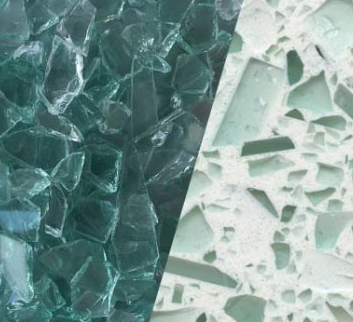
The design is limited only by your imagination. Natural marble chips, granite, quartz, colored glass, mirror shards, brass or metal pieces, and even recycled materials, seashells, or wood fragments can be blended into the terrazzo mix to create a unique aesthetic.
What are the differences between epoxy terrazzo and cementitious terrazzo?
- Epoxy Terrazzo: Resin-based. It can be applied much thinner (typically 6 to 10 mm), is flexible, has a minimal risk of cracking, and offers unlimited color choices. It is recommended for indoor use only.
- Cementitious Terrazzo: The traditional method. It is thicker (15 to 25 mm) and can be safely used both indoors and outdoors due to its complete UV stability.
How are terrazzo floors maintained and polished, and what should be avoided during cleaning?
Once a terrazzo floor is properly applied and sealed with high-quality protective impregnating sealers, maintenance is incredibly simple. Daily cleaning requires nothing more than a damp mop. Acidic, abrasive, or harsh chemical cleaners should be strictly avoided.
Why is terrazzo preferred in high-traffic areas like airports and shopping malls?
These areas experience thousands of rolling suitcases, shopping carts, and heavy foot traffic daily. On tiled floors (such as ceramics or granite tiles), wheels striking the joints cause annoying clicking noises and eventually crack the joint edges, ruining the aesthetics. Terrazzo’s completely seamless, smooth, and monolithic structure eliminates this noise and provides maximum durability.
6. Pandomo, Microcement, and Concrete-Look Decorative Floors
What is Pandomo flooring, and how does it differ from microcement?
While both systems offer a modern, seamless concrete aesthetic, they have distinct characteristics:
- Pandomo: A cement-based, self-leveling designer floor system. Its surface is exceptionally homogeneous, smooth, and velvety-matte, reminiscent of polished stone, with no visible trowel marks.
- Microcement (Microbeton): Applied layer-by-layer using a hand trowel. It features characteristic trowel marks, shading, and texture, delivering a more rustic, industrial, and organic concrete look.
What is the typical thickness of a microcement application, and does it raise the floor level?
Microcement is applied in very thin layers, typically ranging between 3 mm and 5 mm in total thickness. Because of this ultra-thin profile, it does not significantly raise the floor level, avoiding the need to shave doors or manage major threshold transitions.
How are seamless, concrete-look decorative floors achieved?
Seamless spaces are created using Pandomo, microcement, or specially modified self-leveling systems. Depending on your project scale, traffic load, and design expectations, we formulate custom recipes and application techniques to deliver the best possible result.
Do microcement and Pandomo leak water in wet areas (bathrooms/showers)? Do they crack over underfloor heating? How is staining prevented?
- Waterproofing: When sealed with high-performance polyurethane (PU) sealers, both systems become completely waterproof and can be safely used inside showers and bathrooms.
- Underfloor Heating: Thanks to polymer-modified, flexible additives, these systems easily tolerate thermal expansion and contraction without cracking.
- Stain Prevention: To prevent liquids like oil, coffee, or wine from staining, high-performance protective sealers (solvent-based or solvent-free) are applied to keep the floors pristine for many years.
7. Technical Specifications and Application Troubleshooting
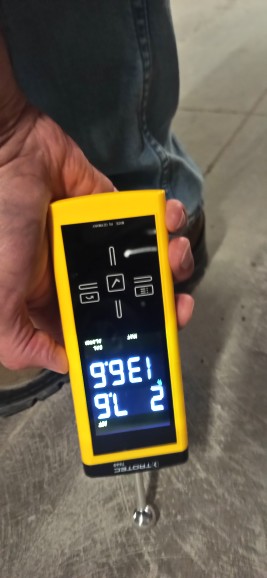
What is the maximum allowable moisture content of concrete before applying epoxy?
Concrete moisture is critical for a successful application:
- The moisture content of the concrete must not exceed 4%.
- In critical situations where the moisture is between 4% and 6%, standard primers must be replaced with specialized moisture-tolerant moisture barrier primers to eliminate risk. If moisture exceeds 6%, the concrete must be allowed to dry further.
How are cracks, defects, and expansion (dilatation) joints repaired before coating?
Cracks are chased open into a “V” shape, thoroughly vacuumed, and filled with high-strength epoxy repair mortars. For dynamic cracks, epoxy injection methods are utilized. Structural expansion (dilatation) joints must never be covered by the coating; these joints must be carried up through the coating and filled with flexible polyurethane joint sealants or finished with custom expansion profiles.
What is self-leveling screed, and is it mandatory before a floor coating?
Self-leveling screed is a cement-based, fluid underlayment that levels itself. For thin-section decorative coatings (especially Pandomo, microcement, or thin-film epoxies), applying a self-leveling screed at thicknesses ranging from 3 mm to 50 mm is often essential to guarantee a flawless, level finish.
What is an “orange peel” (textured) finish, and why is it chosen?
An orange peel finish is achieved by rolling the epoxy topcoat with a textured roller to create a dimpled surface. It is chosen primarily to increase slip resistance in wet areas, loading ramps, and parking garages, as well as to visually mask minor substrate imperfections.
What causes bubbling, peeling, and cracking in floor coatings?
Almost all application failures stem from inadequate pre-analysis or surface preparation:
- Poor Surface Preparation: Failing to grind the concrete or remove the weak “laitance” (cement slurry) layer.
- High Moisture: Applying coatings when concrete moisture is above 4% without a moisture barrier (vapor pressure eventually pushes the coating up).
- Incorrect Mixing: Failing to mix Part A and Part B of the epoxy or polyurethane thoroughly or in the correct ratios.
- Wrong Primer Selection: Failing to use a high-strength or deep-penetrating primer on dusty, weak, or highly porous concrete substrates.
In Summary: Seamless modern flooring systems—whether cement-based terrazzo, epoxy, polyurethane, or microcement—are the future of flooring technology. They offer unmatched durability, hygiene, and joint-free design flexibility that pushes architectural boundaries. When engineered and executed by an expert team, these applications represent a highly profitable, prestigious, and long-lasting investment for your property.